The Collaboration Project Team will develop a secure communication framework enabling virtual verification and validation of parts across additive manufacturing (AM) types and platforms. This includes universal data, types of sensors available per machine, sampling rate, and interdependence data.
Problem
Generating, identifying, prioritizing, disseminating, reusing, and qualifying AM data is challenging and time consuming. Expertise gaps generally limit the domestic manufacturing supply chain’s ability to swiftly solve such problems.
Proposed Solution
The Collaboration Project Team is proposing an initial step (first-year activity only) in a multiyear initiative to address these challenges using a multifaceted, industry-focused approach. Areas to be covered include data sharing, security, identifying and prioritizing data types, establishing minimum data standards for reuse, and part-qualification processes.
Impact
This project will help leverage AM technologies and processes to quickly identify, prioritize, and communicate essential information needed to manufacture parts. Also, developing a secure framework to capture the right data may allow organizations to qualify structural parts for use straight from the manufacturing process without the need for non-destructive or lot acceptance testing. This project is sponsored by the Department of the Navy Office of Naval Research under ONR award number N00014-22-1-2451.
Outcome
The MxD-led team focused on the creation of the Secure Data Repository, creating a proof-of-concept architecture for unifying AM data from specification, production, and testing into a unified digital thread build log. Doing so required the development of a functionalized common data model for additive manufacturing built on the pre-existing AM-CDD and AM-CDM as baseline. The revised/enhanced data model is documented in a formal modeling language and will be shared with the NIST working group which originally created these assets. These outcomes are documented with a reference architecture, system integration plan/requirements, user guide/manual, and demonstration.
Additionally, MxD and LIFT have collaborated to develop an analysis report and roadmap for the inclusion of model-based methods in the qualification of AM parts. LIFT focused on the physics-driven and integrated computational materials engineering (ICME) portion of this roadmap while MxD authored the Roadmap for Use of AI/ML and Deep Learning in Qualification and Certification of AM Parts. This document is being refined into a publication version for full release.
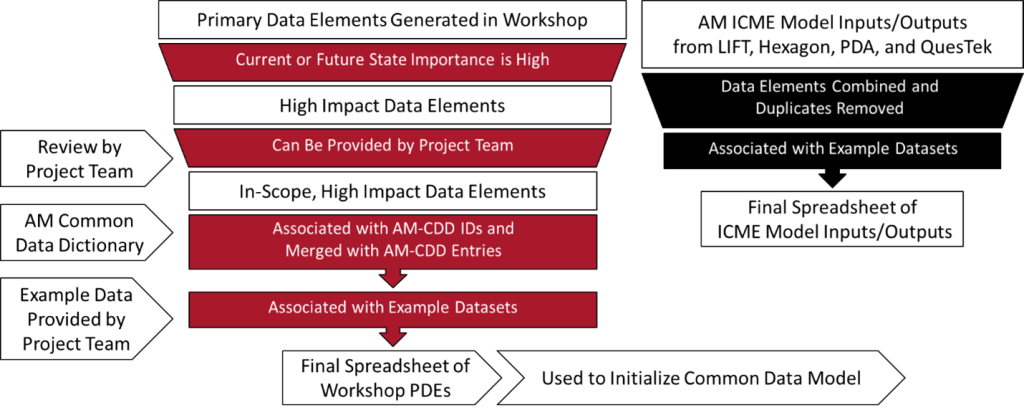
Fig.1 Process to Create Minimum Viable Dataset for AM Data Model
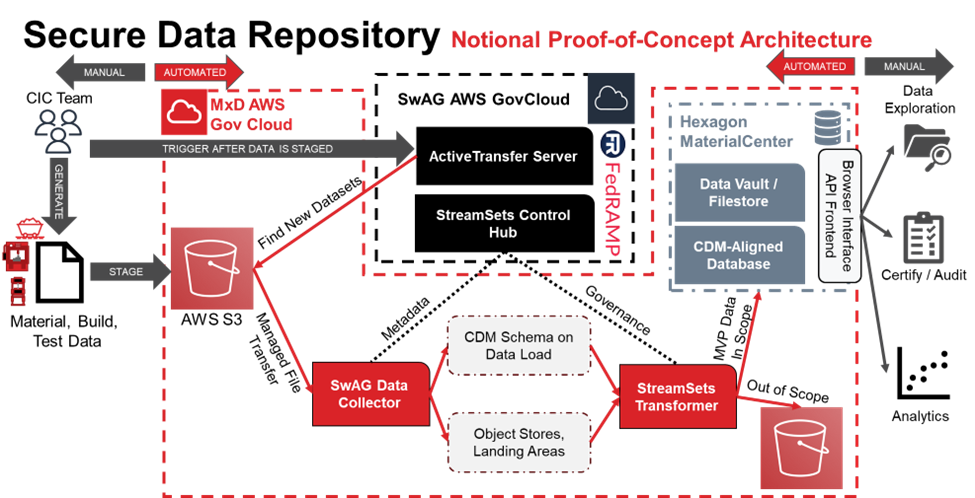
Fig.2 Secure Data Repository – Notional Proof-of-concept Architecture
Completion Date
Project Number
21-30-01
Project Lead
LIFT
America Makes
EWI
PDA
Questek
SAG GS